Tuesday, September 20, 2022

Roadtrip: The Green Bay Botanical Garden.

We had gone to the Green Bay Botanical Garden last year in October and thought we'd check out the summer show.


They have the most profuse display of flowers in any garden I've visited and considered coming here once when looking for a sculpture garden to photograph.


It's built on two ridges and the valley between them. A domed belvedere provides views of the hillsides.


The dome's stellar pattern projects sunbeams on the pillars.


The conifer garden on a terraced slope at the north end of one of those ridges.


The 1:1 Macro challenge for the Fox Valley Photography Group had just been announced. It was a little breezy to be sticking a camera just 24mm from anything but these arbor vitae needles were inside among the stiff branches.


A rose drooping near near the ground also shielded from the wind. I think this is a Peace so the edges should be pink, but the film thought it looked this way.


They have a test garden of new varieties of vegetables and perennials. Hovering an inch above a strawberry. A feat of tripodology that took about ten minutes to get right without smashing any plants.


Near the main center, they have a pavilion for events called the Lusthaus. A straight translation of the German is "summer house," but I'd hate to be here when Beavis and Butthead visit.


There are numerous places to sit and view the garden, made from rustic materials, casting sunbeams and shadows.


We took advantage of several of these.


The formal box-hedged display garden. There was a couple with Prosumer Digital SLR's having very serious discussions about their photographs as they reviewed them on back of the camera. They didn't notice the cardboard camera on my tripod a few feet away. We saw another couple who both had high-end DSLR's and one guy with two hanging around his neck.


I probably couldn't get away with this for the macro challenge. Each one of these bees is at least a foot long.


Last October we followed the main path on our way to the Hobbit House and just passed by a trail that went up the hill. They're constructing a new Children's Garden blocking the path where it branches off to the Overlook Garden that we had overlooked last fall. It first approaches a vine covered ruin.


It winds through the forest to another shelter near the promised overlook.


A creek flows down the hill which you can cross on stepping stones.


For someone who's a sucker for dappled light, this was just the ticket.


A long wall tops the hill in an S curve I coudn't pass up.


We stopped for lunch at a place called Bleu in De Pere.


Say, wouldn't those salt and pepper shakers just fit on a 24x36mm frame?


And one macro at home with a cherry tomato on the candy jar.


Little Guinness has a .17mm hand-drilled pinhole 24mm from a 24x36mm frame.  Fujicolor 200.

Wednesday, September 14, 2022

Aerial Pinhole Photography

Pioneer Airport is part of the Experimental Aircraft Association Museum. It contains several categories of vintage aircraft and includes an active grass landing strip. They regularly offer rides in an open-cockpit biplane. The smallest plane I've ever flown on was a twelve-passenger Beechcraft 99 in 1981. It was kind of a blurry-eyed commuter flight from Chicago after coming in from Paris in a middle seat on a 747. Attending the epic AirVenture Convention last month, I decided it was time to finally experience flying in something more seat-of-the-pants on my 73rd birthday.


There are two planes to choose from - a 1927 Swallow or the "less old" 1929 Travel Air E-4000 which has rod and hinge controls rather than the Swallow's cables and pulleys. I chose the new technology. The company is notable in that it was founded by Cessna, Beech and Stearman who, after they merged with Curtis-Wright, went on to individually found their own very famous aircraft companies. 


The seven cylinder, 220 horsepower Continental R670-4 engine, a historically appropriate EAA upgrade from the original five cylinder.


I've become even more fond of landing gear since I learned that the strategy for landing is to try to achieve level flight about a foot above the runway and then reduce your airspeed until it stalls and falls to the ground.


I wanted to really experience this and not futz with photography during the flight, but I did want to take one picture. When asked about it they said I could take one hand-held camera. While waiting for the pilot to get aboard, I held the Little Mutant against the firewall.


My aerial photograph. There's a few inches of the top of the fuselage behind the windscreen where the camera could be held for the exposure. The rest of the time I held it in a vice-like grip with both hands. We did several classic aerodynamic maneuvers you'll never experience on a commercial flight including a stall, which they teach so you can learn how to land. Doing a tight turn, you get an enhanced perception of the Bernoulli principle at only 80 knots with the plane tilted over 60 degrees. The only bad part was I forgot to check my ponytail before take-off and it took Sarah over half an hour with two products to get my hair untangled.


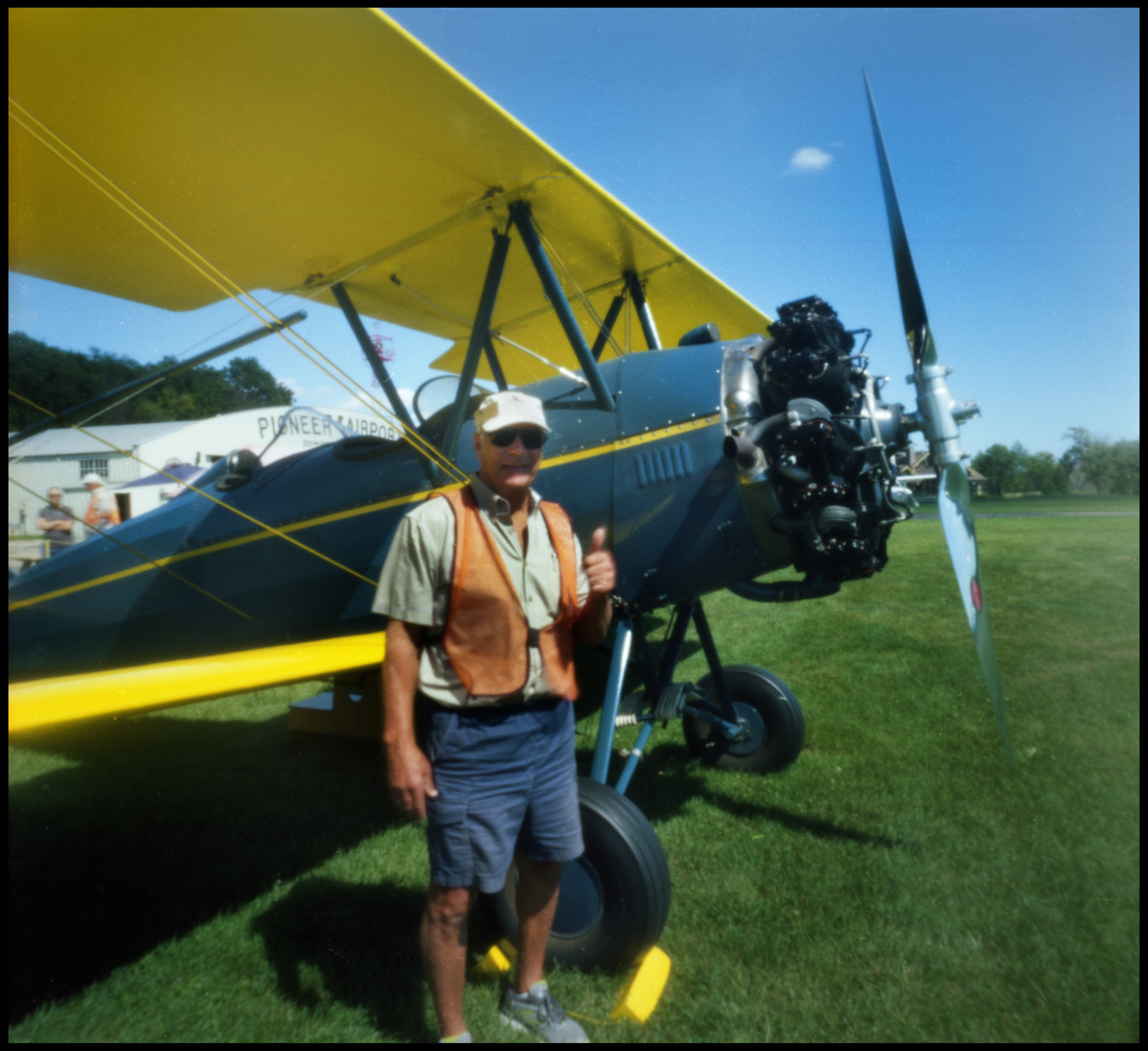
Volunteer pilot Ken Kellner gets to do this about 10 times a day. He was very nice. His descriptions were very illustrative and he always gave fair warning before he did something.


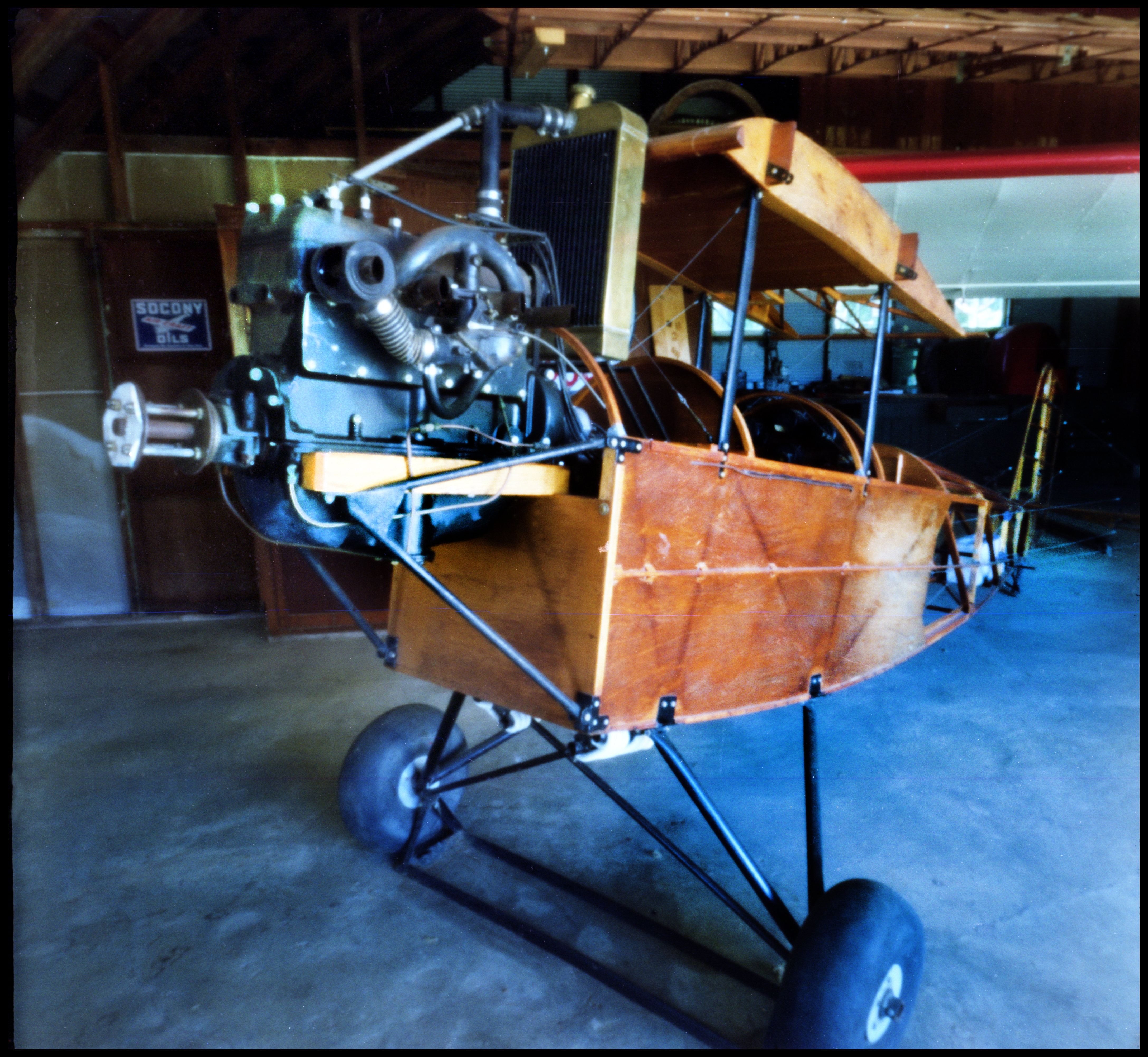
In my piece on the AirVenture Convention I did several photographs of a homebuilt Pietenpol Air Camper made from plans for amateur builders from the 1930s which are still available. They have this half-finished one on exhibit. I noted at that time that I thought the engine looked like something off a John Deere Tractor. It's from a Model A Ford.


Another plane in that blog post was Burt Rhutan's innovative VariEze which was originally powered by a VW Beetle Engine. Volkswagen used to send a quarterly little magazine Small World to owners. I read it from high school through when I had my first new car, a '73 Super Beetle. I remember mentions of someone using a Beetle engine in an airplane but I thought it was some quirky odd thing. It turns out it was kind of mainstream. Wittman Regional Airport is named after Steve Wittman, a prolific home builder and air-racer. In the 1970's he proposed the V-Class in air racing composed soley of planes with VW flat-four, air-cooled engines. This is the specification airplane for the class.


You also have to buy admission to the Museum to get to Pioneer Airport. There's probably something in there to finish the film with.


The Pioneers of Flight exhibit features a replica of the original Wright Flyer made by EAA members. The engine was made by a local high school shop class. The original only flew four times and got blown over and broken at the end of the first historic day. This exposure is over 10 times as long as their longest flight.


A shiny display of Lycoming engines was under a spot light with half the exposure time of the rest of the museum.


The Little Mutant has .27mm pinholes on the axis and 15mm above it, 45mm from a 6x6cm frame. The film is Kodak Gold 200.

Saturday, September 10, 2022

A modification of the film transport in the Evil Cube and Compact 45.


This Bumble Bear Compact 45 was built to further refine the way the film reels are kept parallel.

The winder inserted into it keeps the top of the film reel from wandering, but with my cardboard cameras the bottom tends to twist outward and backward when pulling the film. Most cameras have some kind of clip or axle at the bottom. I tried this with the original Evil Cube but I kept losing the small parts that did that. In the Evil Cube template there's a double layer of cardstock, the same width as the flange on a 120 reel that stops the bottom from moving. Spacers added to the top make sure the reel stays down against it. This was a really simple, easy to make solution but once or twice it failed so I started looking for a better method.


The new idea was to make a part which would attach to the top and bottom and create a bay that would restrict the movement of the reel, but would still allow film to pass to the other side.


The first attempt was done by just measuring and drawing the new part out with a pencil. Then I laid it out in Inkscape when I did the Compact 45 template. It's a little tricky because this space is triangular with three sides of different widths. Originally there were only the three sides, but it turned out to be much easier to put together with that fourth one. It also needs a tab at the bottom that folds in under the film reel or it might slide under this new piece if the glue came a little loose. To complicate things, either side is a mirror image of the other. Notice that I marked them A and B so I remembered which side went where.


It's a little bit of a hassle to put together and a hard-to-clamp situation. To get it in the right place, it's necessary to hinge it to the back of the film holder with tape (which you're eventually going to cover with tape anyway), then apply glue on the inside, top, bottom, and flap, then clamp it with a rubber band and a clothes pin. I also covered the flap under the reel with tape so it didn't come loose from the film reel being inserted over it. I used glue because there's not much area at the top and bottom and sheet adhesive can't be squeegeed to stick well in this arrangement


It works but it's still a little fussy to load and wind.  Here's a short video on the technique.


Note that in a couple places in that demo, I mix up "take-up" and "supply" but the video is of course right. I also forgot to mention to tighten the supply reel after advancing to make sure the film is flat in the back of the image chamber. I'm a pretty terrible on-camera personality and I find video editing extremely tedious. I first learned video editing on half-inch open reel VTR's. Digitally, I started with Final Cut Pro. iMovie is like doing it with gloves on.

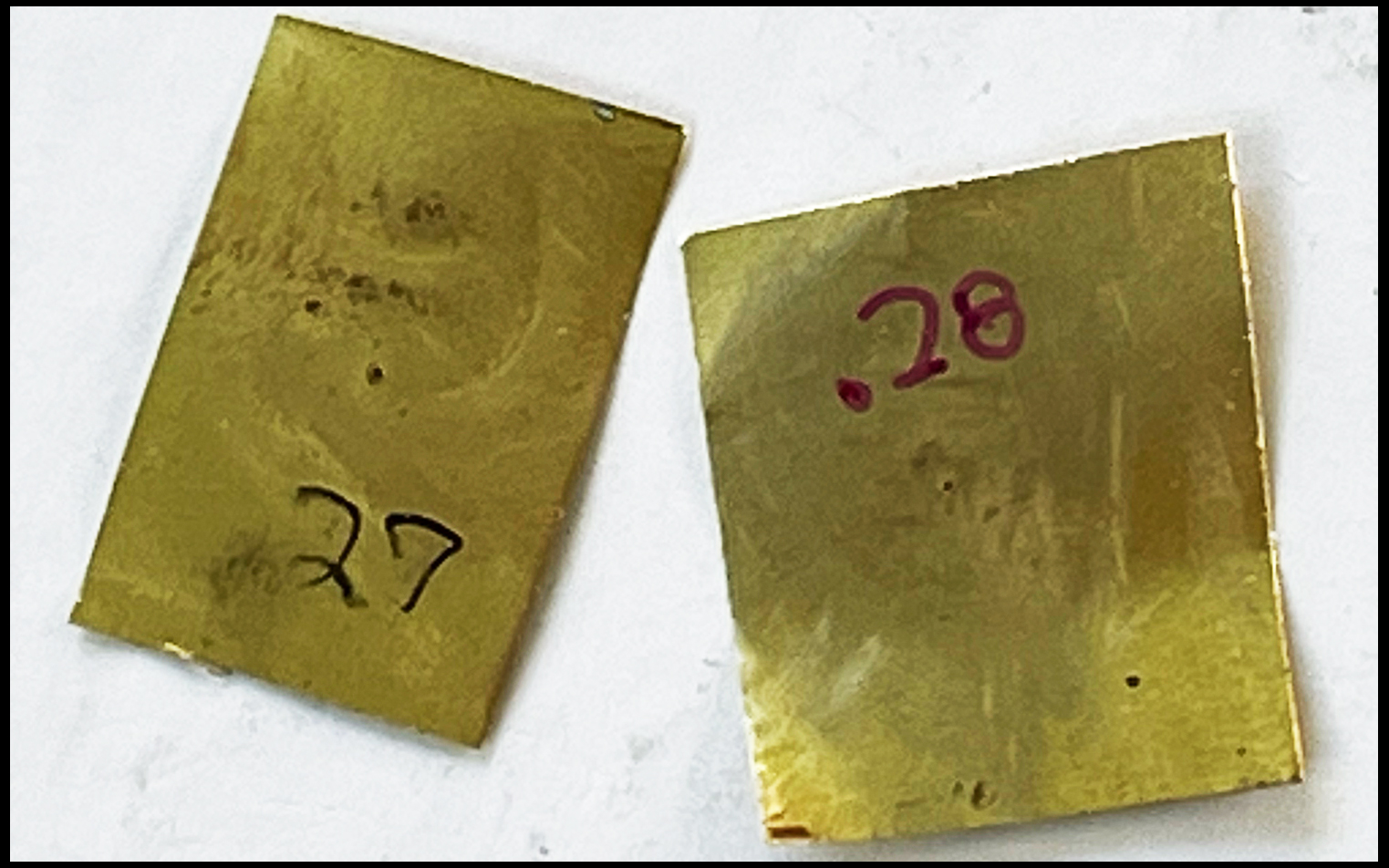
There was a .27mm and a .23mm pinhole in my stash. I just enlarged the smaller one with the tip of the needle to get it to .28mm. It usually ends up too large when I try this but this time hit the exact optimal size necessary.


There are no viewfinder beads on the back. The film format is a smidge less than the height of the box so you can just use the back corners to line up with the front beads,


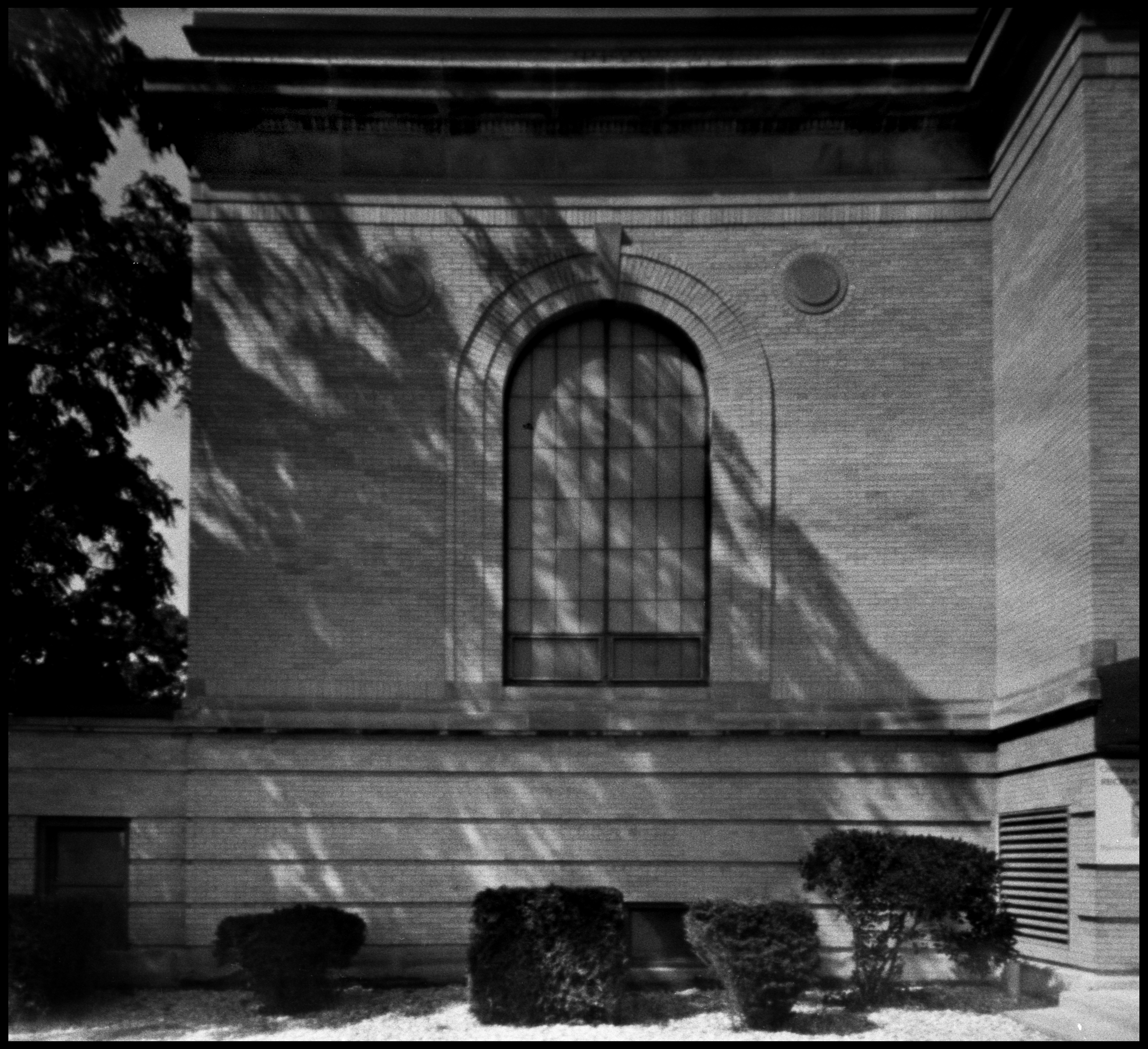
I had noticed that the side of this old firehouse had been dressed up recently and was often dappled by the trees on it's south side. Thinking there was no one there, I rode into the parking lot and when it was too late to leave unnoticed, saw that a couple in lawn chairs were reading in the shade. I asked it they minded if I photographed their building. They lived in the first floor apartment and we had a nice conversation about the restored building and the attractive lighting.


More tree filtered lighting on the Time Cinema stopped me on Main Street. There is a street sign which prevented me from getting any farther back. This is what can happen if you don't retighten the film after advancing to the next frame.


A decorative door and window on Market Street across from Opera Square


I was on my own for lunch that day so I got a hot dog and sat in the shade in Roe Park.


Tree silhouettes on the wall of the Rec Gym.


More trees acting like a gobo on the side of the courthouse


The Paine Art Center has been having an exhibition with the pretentious title, The Nature of Light.  It consists of pierced-metal geometric solids scattered about the house and garden, but no mention of Newton or Maxwell. The cardboard from which the camera is made is pretty dark grey stuff, but there is a bit of white printing on it which may have contributed to the light stripe across the top. It's since gotten a severe black spray enamel treatment on the inside.


At night these are illuminated from inside with the patterns projected all around, with various other light sources washed around the trees. One is large enough to enter and in sunlight the patterns cover the interior.


The night show is pretty interesting. The whole thing had a Kubrickian feel to it. 


I still have a few weeks to work on the Macro Challenge for the Fox Valley Photography Group. The scar on my knee might be interesting,


The Bumble Bear has a .27mm pinhole on the axis and a .28mm pinhole 15mm above the axis, 45mm from a 6x6cm frame. The film is Arista.edu 100 semi-stand developed in caffenol. The beer is from Lakefront Brewery in Milwaukee.

Friday, September 2, 2022

A more compact 45mm


The original Evil Cube was made with just a crude template of the top. It wasn't a complete plan. I measured parts using the take-up reels for the height and the 6cm format and distance to the pinhole. Cutting out flat pieces of matte board and glueing and taping them together. I remember thinking that you wouldn't have room for the reels with a wider angle camera. The Evil Cube Template just followed the original 60mm design. A wider angle camera with a more cubical shape led to the Variable Cuboid Camera System. After making a few of the Evil Cubes, I realized that there is enough room to make a 45mm camera with a full 6x6cm format without making the camera any wider. After a few hours in Inkscape, a new template was ready.

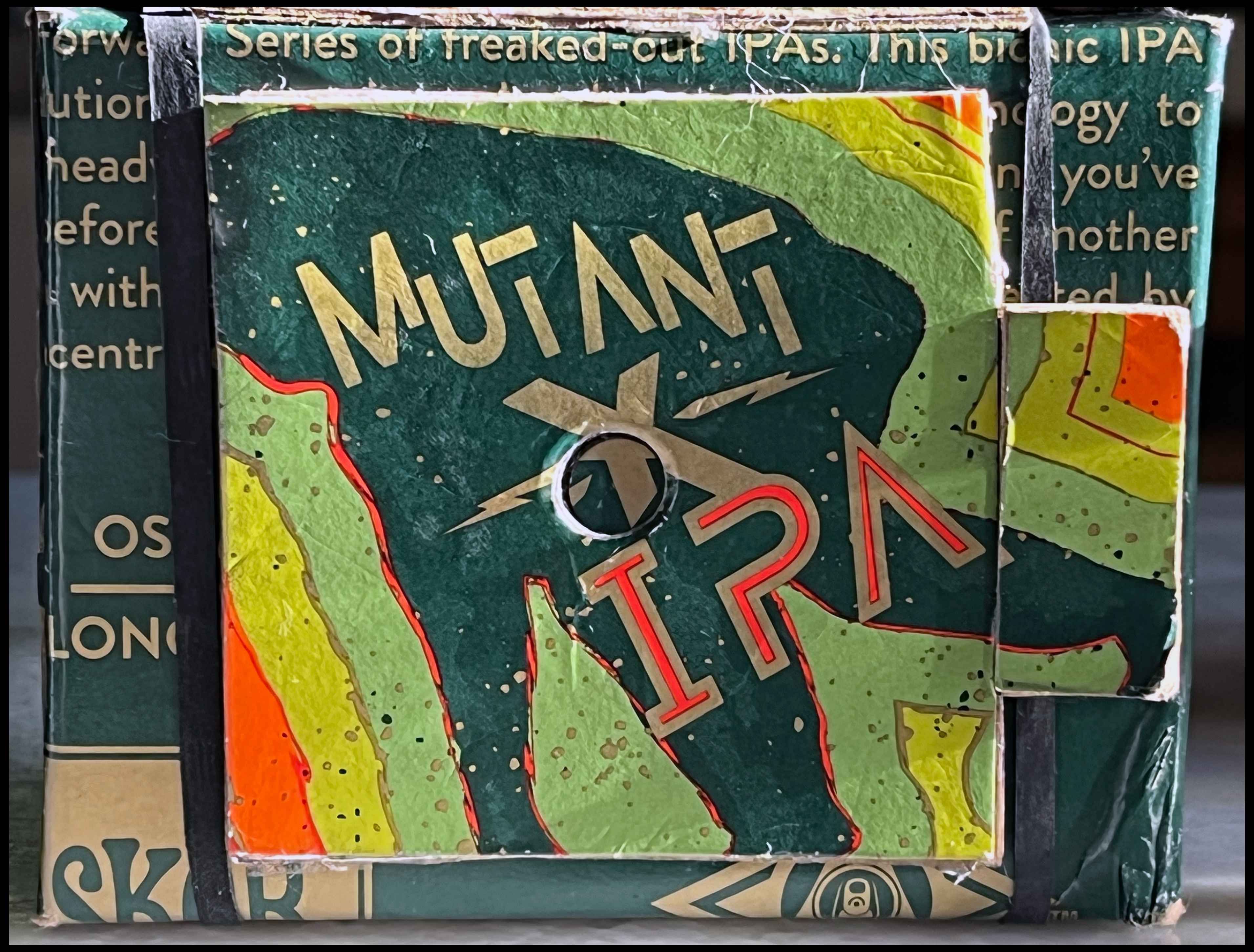
This camera is made out of the carton of a six pack of Mutant X IPA by Oskar Blues Brewery of Longmont, Colorado. Of course it was chosen because of the package design. The beer at a modest 7.0% APV for an IPA avoids some of the unsweetened grapefruit impression of a lot of IPAs. The taking shutter is centered on the eye of the mutant and the name is featured on the rear shutter. The text "...Forward Series of freaked-out IPAs. This bionic IPA..." is the line of the copy that just happened to appear just above the counting shutter. You don't always have a lot of choice with just one six-pack to work with,


A lot of the impetus behind this is to make the smallest 6x6cm medium format camera possible. Here it is compared to a 45mm 120 Populist and the 60mm Evil Cube it's based on, which makes it seem pretty small. The 35mm Populist is more pocketable, but as a lot of advertisements in the 20th Century would tell you, every 6x6cm frame has over four times more film.


Initially I couldn't get it loaded. The take up reel wanted to twist just a little bit which in several turns is an unstoppable error. I eventually discovered that if it was wound dangerously close to the first frame of film, it would load and advance smoothly. I had a similar experience with Sarah's Spooky Cube once. I think the problem is some slightly shoddy manufacturing, but I won't know for sure until I've made a few of them.

Between the construction of the new middle school, emerald ash borer and just plain old age, it's been a bad couple of years for the great trees in our neighborhood. That inspired me to go photograph the oaks in East Hall field a few blocks away. Originally the site of a hospital which was eventually converted to a dorm and then torn down, it's still owned by the university despite being some distance away from campus. It's been a four square block, underutilized athletic field. The school district recently leased it from the university for 99 years to locate some athletic facilities there for the new middle school a block away. This might be the salvation of the historic Merrill School which the school district intends to tear down to build a track. Whatever, I hope they have the sense not to mess with these trees.


An individual Quercus.


The bell that used to be in the firehouse attached to the old city hall, in front of a contemporary firehouse which now occupies that location. It was cast in 1874, the year before most of Oshkosh burned down.


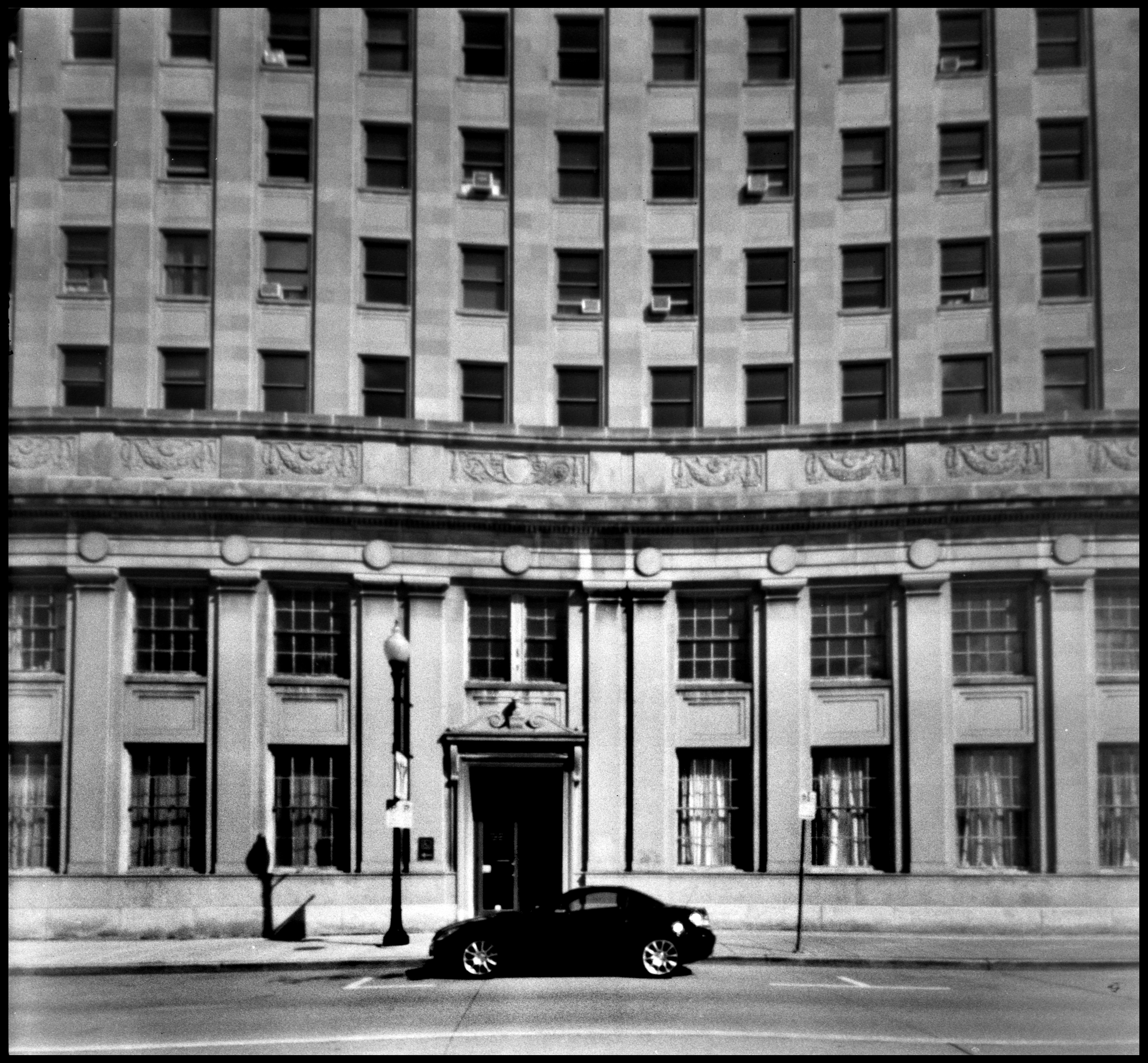
Another to add for my zine Warped if I ever get to it. I usually try to photograph buildings when no one is parked in front of them, but a BMW sports car is more decorative than most.


I was on my way to Opera Square to photograph a historic block of buildings on Market Street, but there was a professional photo-shoot with assistants and umbrella reflectors behind the Grand Opera House. Viewing this from the next corner, I noticed this reflective alcove next to me. I had just seen a few images by Lee Friedlander and this kind of reminded me of that. The camera is behind the pole, but you can see me timing it on the left and my bicycle on the right.


They've built this black Monolith shaped tower a few meters behind the white Miles Kimball building, recently pierced by all these holes. Think the architect is a Kubrick fan?


The facade of the restored Sinclair Station on Oregon Street. I used to ride my bicycle to places like this to buy cigarettes for my Dad. The tripod is in the bed of a pickup truck and I made sure to keep moving during the exposure.


The challenge this month for the Fox Valley Photography Group is macro. This white agate was sitting in front of me on the lanai backlit by the late afternoon sun. Arugula flowers seemed just the right size for 1:1 on a 6x6cm format, and had the right kind of monochrome detail. Not sure I captured the light.


The sun was shining on this little bronze boy which is the handle on a planter. His arms are held out as if holding something. I filled them with parsley which might provide recognizable scale. It took fifteen minutes futzing with it and then the sun went behind the garage about five minutes into a twenty minute exposure. I left it for another hour and a half, but don't think it captured this scene very well either.


This is the last you'll see of this 72 year-old dude. The next day was my birthday.


The Little Mutant has .27mm pinholes, one on the axis, and one 10cm above the axis, 45mm from a 6x6cm frame. The outside dimensions (including the winders) are 90 x 52 x 85mm. (3½ x 2⅛ x 3¼ inches). The film is Arista.edu 100 semi-stand developed in cafennol.