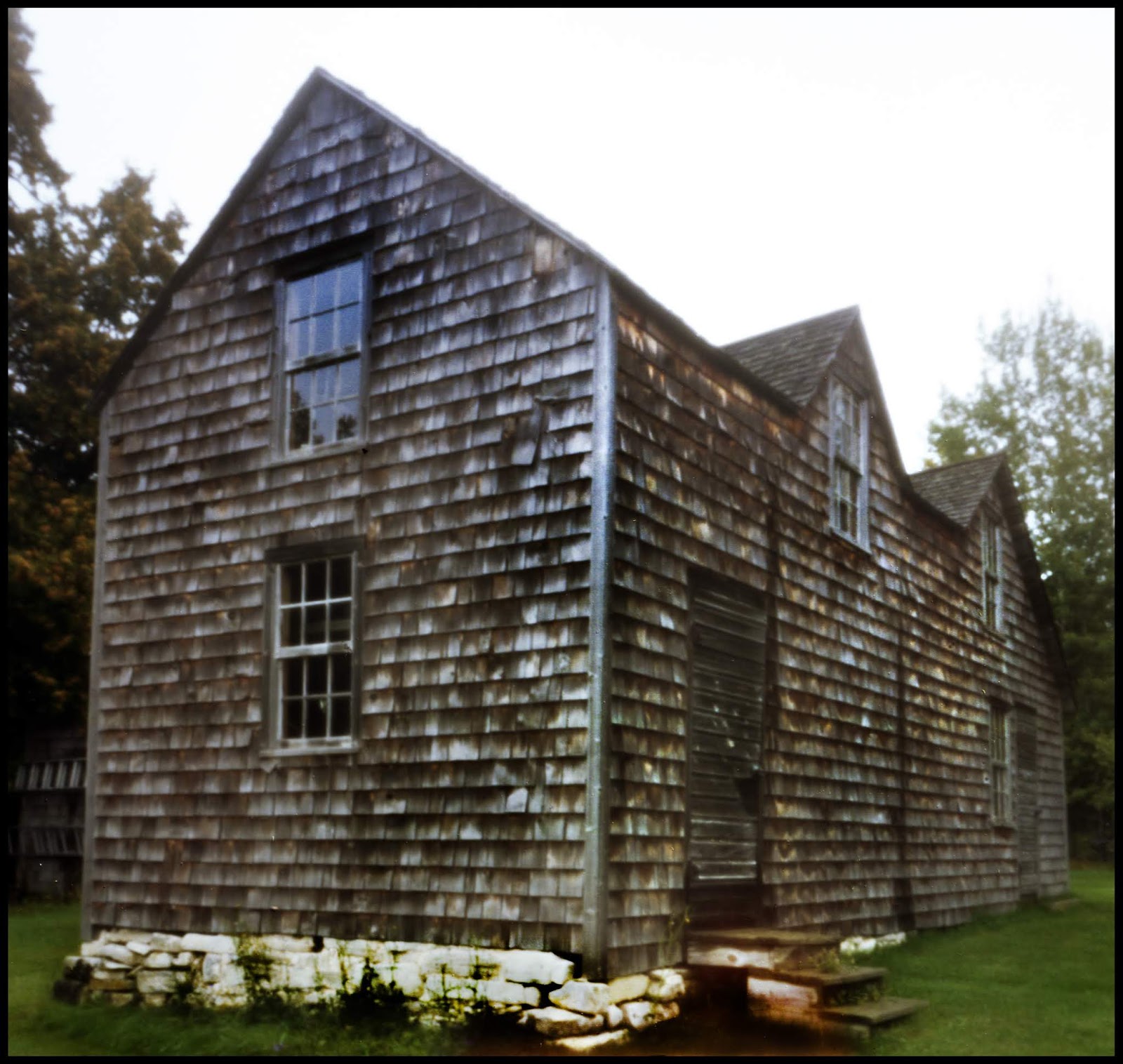
Monday, October 28, 2019

Rephotographic project reimagined.

I’ve been invited to participate in an exhibit at the Oshkosh Public Museum. (Full disclosure: I volunteer at the museum.) The theme is a twist on the common Rephotographic Project, where scenes from images in the museum archive are reproduced as exactly as possible in the present day. They’ve already done that. In the lecture room are some lenticular images with very recognizable Oshkosh scenes taken in the late nineteenth and in the early 21st century that fade from one to the other when you walk by.

This project has a slightly different take. To quote curator Deb Daubert’s invitation: “We are seeking photographers who would use historical photographs from the Museum’s collection and recreate or reimagine them to fit today’s perception.” That sounds just like the kind of photography I’ve been doing for the last few years.

We were provided with a selection of images and their catalog descriptions but I was told I could search the archive of 70,000 pictures to find things to fit into my contemporary perception.

I wrote out a list of addresses from the descriptions and headed out with the Variable Cuboid.

The corner of High Street and Main. That’s always struck me as a funny address. Isn’t the high street suppose to be the main street of the town?


125 and 127 Main were one store, but now the entire block is occupied by US Bank.


It also occupies the block of 59 Pearl Street.


The two story part of The Electric Lounge is in one of the historical images.


One of the descriptions specified the northeast corner of Washington and Jefferson. That’s the Oshkosh Public Library now. Funny they didn’t mention that. I chose to concentrate on the corner but might go back when there’s more directional light.


What that description should have said is the northwest corner of Washington and Jefferson. The three-story-and-a-bell-tower, neo-romanesque Post Office was on this corner until 1939. The site was a parking lot until 1951 when the one-story Oshkosh Savings and Loan was built around it’s drive-through. I was so excited to get the First National Bank building behind it lit up by the sun against the dark clouds. Neither building is a bank anymore.


By the way, all the streets downtown have one name on the east side of Main, and another on the west. Here is the view east down Waugoo from Main toward the former Oshkosh Northwestern. I wonder where their photo archive is?


Across from Menomonie Park was Lakeside Sanitarium which became Mercy Hospital and now is Bella Vista retirement complex. They do have nice views over the park and Lake Winnebago. Andy recovered from his tonsilectomy in one of those rooms but I don’t think I looked out the window.


This place, at the corner of High and Wisconsin, started out as a minor lumber baron’s mansion and went through numerous lives as the Ladies Benevolent Home and the Twentieth Century Association. Now it's an apartment building full of students who attend the University. Notice how the left side is lit by the reflection off the windows of the ten story Scott Hall across the street. The exterior is remarkably unchanged except for the addition of the fire escapes and the ugly sign identifying the rental agency.


Just behind it on Algoma is this plain Queen Anne, now a frat house, that replaced an earlier Greek Revival from 1868. It looks like the arbor vitae is trying to hide the big Greek letters.


As you might guess, when riding around to get these pictures, I just ran across other scenes to photograph. If I could search the archives, odds are an image would match them.

The Oshkosh Public Museum, the former Sawyer Mansion, is itself the subject of many images in the archive.


What was I thinking when composing this picture? If Justin Quinnel is reading this, I know he’s thinking that if I had just put the camera on the ground, the composition would have been better. The invitation did talk about today’s reinterpretation so this asymmetric treatment of the arches might work.


I was going to the Public Museum because the mid-autumn, early morning sun was shining directly down Algoma Boulevard, dramatically illuminating the buildings along it. I had just done the Pearl Street view of the US Bank and was really happy that the 35mm front was still on the camera when I passed these sunbeams streaking across this neoclassical portico. This was the First Church of Christ Scientist until recently but now it’s the non-affiliated Water City Church. Three young staff members went up the steps during this exposure. No one said anything more than hello.


I went down Church Street going back downtown and passed similarly raking light on the underground parking garages of the Public Safety Building (i.e. the police) with this black Dodge Challenger parked in front of them.  While I was packing up, a man in a leather jacket with grey hair done in a Brill Cream style came out of the building, lit a cigarette and got in the car.


I’ve always liked this composition of the Wagner Opera House and the Raulf Hotel but was always disappointed with a closer view with a wide angle camera. The 200mm front allowed me to get the composition I was seeing.


The parking structure of the Waterfront Hotel along the River Walk featuring one of the distinctive street lights.


This was once a narrow street between the Mercury Marine Engineering Lab and Radford Company, a builder of wood products like cabinets and doors that drove the nineteenth century economy of Oshkosh. It’s now the parking lot of a restaurant. Rather than move the pre-existing utilities, they just wove the sidewalk around them.


In order to see what ends up in the exhibit, the archive images they’re matched with and what the others come up with, you’ll have to come to Oshkosh next spring.

I used all the fronts for the Variable Cuboid except the 20mm.
Two rolls of T-Max 100 stand developed in Rodinal 1:100.
Three bike rides.

Saturday, October 19, 2019

Full system field test of The Variable Cuboid


I've conducted field tests of certain parts of the Variable Cuboid Pinhole Camera System and was pleased with the results. It's time to bundle up the whole thing, head out on the bicycle and change to the appropriate angle of view as I find scenes to capture.

Everything fits comfortably in my backpack, with some room to spare.

To review:

The format is 6x6 centimeters. I have two backs. In the mid-mission review I noted that the fronts from Back No.1 wouldn't fit over the slightly larger Back No.2. I've since modified the light traps so that all the fronts fit both backs.

I have six fronts: 20mm, 35mm, 45mm, 60mm, 100mm and 200mm. The 20 and 200 have a single pinhole. The 35 and the 100 have axial and risen pinholes, and the 45 and the 60 have adjustable rising fronts.

I got the changing bag free in the late '70's from an ad agency that was converting from 16mm movies to video.

Changing the fronts in the bag is pretty easy. I found lots of places to set the bag so I could do it comfortably.  The 200mm is the tightest fitting front and once, when I opened the bag I could see that it wasn't fully seated. I snapped it closed as fast as I could but the frame was partly fogged. I also lost another frame when I couldn't remember if I had advanced the film. I had and wound past a unexposed frame.

I often ride by this old school building that now houses a small construction company. I left home with the 200mm mounted to get this cupola framed by two other buildings. The camera and tripod were set up and ready to make the exposure when an employee in a big van backed up to the door of the building at the lower right. I asked if he was going to pull into the building. He told me no but he would only be a minute and he was true to his word. He didn’t seem to notice I had a cardboard box on the tripod.


Otherwise there was nobody around.  I changed to the 45mm sitting on a pile of concrete blocks. I had plenty of room to get farther away, but I chose the 45 to pull out the little entrance structure a bit.


Like most buildings, St. Mary's is surrounded by wires of one sort or another. There's one just out of the top of the frame that kept me from getting any farther away. This was done with the 100mm. I made the change sitting on the side of a planter.


A giant oak in the back of the Morgan House. I already knew I wanted the 60mm because I had screwed up an attempt at this scene when testing the adjustable rising fronts. I made the change sitting on the steps of the porch on the left.


Also with the 60mm, another redo from that earlier roll was this stairway in the back of the old Chief Oshkosh Brewery.


Last summer I photographed a nicely lit back wall of this church in a slightly decayed state. In that post I explained that I had tried to get that picture several times. One of the reasons I couldn’t was when the whole congregation was there restoring the church. They kept that up throughout the year and the place looks very nice now, so I thought they deserved an update. Too bad about the wires. This was still with the 60mm.


Back across the river to the brutalist City Center former shopping mall. This atrium entrance on the river gets used a lot by employees, and several walked past while I made the exposure. In this case some planters that separate the river walk from this plaza kept me from going farther back. I changed to the 45mm sitting on one of those planters. The verticals look parallel , but it seems it was pointed a little to the right. Getting a wide angle camera perfectly level and parallel is easy to screw up.


Continuing with the 45mm and much more successful with the alignment and framing, here's the back of Britton's Walkover, squeezed between Camera Casino and Kitz & Pfeil Hardware.


I changed back to the 200mm on a track of a giant front end loader. That was the one where I fogged the frame. Coincidentally, the next frame was the one I advanced past because I couldn't remember if I had already done it.

I had already been planning to do this bridge tender’s house with the 200mm. I had to wait for a bridal photography session using the Riverwalk as a background. They were still just about 20 feet away when I took the picture but they didn’t seem to notice me.


When I got home, to complete the range,  I switched to the 20mm and took this rather sinister view of my hand.


It's an odd experience sitting in public with your hands in a changing bag. Swapping the fronts takes about two minutes, only about thirty seconds of that with your arms in the bag. The most tedious part is opening and closing the two zippers. If you're not self conscious about it, not in a hurry and comfortable with the bag supported on your lap or some counter-height surface, it's not that bad, I did have an episode or two where I raced the light and lost, but I wouldn't have gotten the shot I wanted without changing the angle of view anyway.

I did learn to check that the new front is seated correctly. I've since learned that you should put a rubber band around the camera while you're in the bag. A clumsy move getting it out can pull the front off. The good news is that only one frame was ruined.

It's a little tricky to load. The key is to get a good two or three wraps around the take up reel before putting it in the camera to make sure the film is winding straight on the spool.

To summarize the assessment of the system, I think I may have discovered the best way possible to take pinhole photographs.

Kodak TMax 100 stand developed in Rodinal 1:100.

Saturday, October 12, 2019

Roadtrip: Neville in Door County

Laura just retired after watching Gene, Sarah, and I living relatively unscheduled lives for several years. She has been itching to go on a roadtrip in the middle of the week and to visit places she hasn't been. Door County is a major tourist destination in Wisconsin but she and Gene had never been there. Sarah and I had only made a day trip there in the late '80s. We planned our visit around a performance at Peninsula Players Theatre on a Tuesday night.

I loaded Neville with a 36 exposure roll of Lomo 100.

They arrived at our house on Monday afternoon. The white highlight near the chair is not their Bichon - it's Gene's shoes.


Laura doing some research as we plan the next day.


Dinner in the dining room.


Oaks chocolate and Port after dinner.


This is exactly how things looked to me just before I went to bed.


 Triple exposure! My last attempt at the dining room table; a leafy view I don't remember taking; and Door County Distillery, our first stop along the way.


The tasting room where you can sample their products.


Despite the somewhat gloomy weather it was still rather warm and muggy, so we enjoyed our drinks on the deck 


Cherries are a signature agricultural product of Door County, and clear Cherry Brandy a specialty of the house. I had their version of the Wisconsin State Cocktail, a Brandy Old Fashioned Sweet. Why do people think it's hip to serve drinks in mugs which look like you can't afford glasses?


It tasted like cherry soda pop.


Our first night was at the Landing Resort in Egg Harbor. All the hotels in Door County are either an inn, a lodge or a resort.


We shared a nice apartment style suite with one of the beds in a loft.


It had a deck facing the woods and some of the HVAC equipment quaintly disguised with latticework.


It was too early for dinner and the Hatch Distilling Company just happened to be right across the street.


All the shiny copper equipment is visible from the tasting room.


Studying the menu of custom drinks and specials.


Worried about my endurance at the theater later on, I got one of the specials - a Jamaican Jerk Virgin Mary.


This was the only time the sun came out during the trip.


On to dinner in a nice tapas restaurant housed in a restored home.


It was the best meal of the trip.


On the drive up, although it's never more than a half mile from Green Bay, you only rarely get a glimpse of it. The next morning we stopped at the Egg Harbor Marina and walked out on the breakwater to watch the rain clouds move in.


Door County is part of the western end of the Niagara Escarpment which creates dramatic cliffs overlooking Green Bay.  You can't see much from the highway but every few miles there's a County Park down a dirt road, through the woods, where you can see the bay.


This one had a platform out over the edge.


It rained pretty consistently most of the morning but Door County is well prepared to give you an opportunity to shop when you can't enjoy the natural beauty. We stopped at the Tannenbaum Shop, an all-Christmas-all-the-time store in a converted church but which also had a nice display of Halloween decor.


As noted in an earlier post, we took the ferry across the Death's Door Straight to visit Washington Island.


At the Sunset Resort, this hallway was pointed out to us as where to view the eponymous sunsets.


The property has been a resort since the 1890's. The current building is from 1938 and it's been run by the same family since then. Some of the furniture in the rooms looks original.


No TV's and only a whisper of the internet in the rooms. So we spent the evening in the common sitting room downstairs. We had the TV to ourselves and watched Rachel Maddow. There were several groups in the adjacent dining room playing cards and Mahjong.


An earlier post illustrates the day on Washington Island, and there's still film from the trip in the Manic Expression Cube.

Neville has a .15mm hand-drilled pinhole 24mm from a 24x36mm frame. The film is a 36 exposure roll of Lomography Color 100. 

Saturday, October 5, 2019

Roadtrip: The Evil Cube beyond Death's Door.

That's a really dramatic title for a middle of the week getaway for two retired couples.  Laura, Gene, Sarah and I went on a roadtrip to Door County including a day on Washington Island at the tip of the peninsula. The straight between them is known as Death's Door from the time before marine engines and weather satellites. Lots of Great Lakes sailing ship captains lost the bet trying to save the extra day sailing around the island and got surprised by a sudden storm. We only had to deal with overcast skies and frequent drizzle.

We stayed at the Sunset Resort on Figenscaus Harbor on the west side of the island, so-called because most of the rooms have a direct view of the sunset, when the weather allows.


The quaintness of the place was reminiscent of the Gordon Beach Inn on the other side of Lake Michigan. This wet shingled building is right next to the main lodge.


I guess it's no surprise that a bunch of Scandinavians settled in the area with it's fishing, rocky farm land, and ice. This twenty-five year old stavkirke was built by some of their descendants. It's based on the one in Borgund, Norway which I saw once for a brief moment when we literally swung by it on a nauseous Nor-Way Bussekspress trip through the mountains from Balastrand to Oslo.


There's a parking lot in front of it but there is also a woodsy path which leads to the mid-century modern Trinity Lutheran Church, whose congregation built it. Approached from that way, it is a little like finding yourself in Middle Earth.


I can imagine meeting with Gandalf in there.


We went to Washington Harbor at the northwest corner of the island to visit School House Beach, notable for the smooth limestone rocks that cover the shore. During the sailing era, this was the center of commerce on the island.  Going around the island was no guarantee of safety.  There is a sign describing a major shipwreck out about where the buoys are. After school starts the tourist demographic in this area is noticeably in the older range so it was kind of a pleasant surprise to encounter this young family pondering the waves.


Jackson Harbor in the northeast corner was the center of the fishing industry in it's heyday before the invasive mussels cleaned the water and disrupted the food chain. The local Maritime Museum is located there.


Our trip back was on the ferry boat Washington. The airport is a grass strip and the only other way in or out is across the water.


Returning to the mainland, we passed the outbound Robert Noble as we went around Plum Island. They're moving to the left and we're moving to the right.


All with the Evil Cube.  .3mm pinhole 6cm from a 6x6cm frame. Portra 400.

Lot's more of this from Neville to come.