Wednesday, November 28, 2018

Pinhole Lab Camera Model 2X


The Pinhole Lab Camera was designed around a 2½ x 4 inch sheet of paper, one eighth of an 8 x 10 sheet, with the idea to keep the cost of using it to a level appropriate to shrinking school budgets. What if you didn’t care about cost and were willing to trade a little inconvenience for a big negative?

The Model 2X is exactly twice the dimensions of the original. I didn’t have to redesign anything. It's just the same PDF printed at 200% on a large format printer.

Although cost is no longer an issue, the pinhole lessons of recycling and use of common materials remain. It would take one heck of a cereal box to make this camera. If the template has been enlarged, the thickness of the material also has to be doubled if it was going to fit correctly. You need something a little stiffer for the larger sides of the camera to stay rigid.

Making Goldberry got me interested in the potential of corrugated cardboard. It’s ubiquitous in our e-shopping world, thicker than a cereal box and big boxes made out of it are common. The kids I used to work with gave me a carton from a 30 x 40 inch package of foam core, which was just enough.

Because there was so much surface to cover and the glue might start to dry before it got evenly spread, I used 3M Super 77 spray adhesive to attach the template to the cardboard. Otherwise it was just like building the original.

The dimensions have doubled so the negative is 5 x 8 inches, 4 times the area, exactly half a sheet of paper of course.

I stuck with .5mm pinholes made by completely piercing brass with a #10 darning needle because they're so easy to make. That size is mathematically optimal at about 5½ inches but with this large negative a smaller pinhole will give more benefit than it will lose from suboptimal diffraction.

With a 1½ inch reducer and a 4 inch extension, I have pinhole distances of 3½ inches (71 x 90 degrees at f178), 5 inches (53 x 70 degrees at f254), 8 inches (34 x 53 degrees at f406) and 12 inches (23 x 36 degrees at f610).

I have a few projects in mind that would benefit from the higher resolution of the large negative that would require going out and about away from the darkroom.

To use this camera in the field, a changing bag is necessary to reload and to add or remove the accessories. Loading a box this big in a changing bag is a challenge. When adding or removing the reducer or extension, I had to put it into the bag to unload the negative, take it back out to make the adjustment and then put it back in the bag to reload. After some practice ahead of time, it was manageable doing this sitting on a building entrance stairs. It takes about 10 minutes.

The camera, the reducer and extension, the changing bag and a box of paper wouldn’t fit in even my largest backpack and bike bag but it all went in my farmer’s market canvas bag. It’s all pretty light so it can hang over my handlebars if I ride carefully. It's not in the photo, but there was also a two-foot long piece of screen molding to use as a straight edge for viewfinding and of course, a roll of tape.


I printed it in January and built the thing in March. Being a little sick of the drab winter, I waited for more pleasant weather but got obsessed with a few other projects. Once it got hot I couldn’t imagine sitting outside in a long-sleeved black T-shirt with my arms in a changing bag. Eventually, on a Saturday in late October, I finally went over to the University on a morning with bright sunshine, which seemed necessary working at f610 with ISO 5 paper.

I managed to make an exposure at each of the pinhole distances.

After another month wavering on whether to mix a whole quart of paper developer, this weekend I ended up using Rodinal 1:50. There was a lot of uneven development in the highlights. In an interview with Marko Umicevic on the f/D blog, he described how he essentially does stand development with paper. I think I'm going to try it at 1:100, agitating a bit at the start and then letting them stand longer. Some experimenting around home, to get this right before setting off on the project I have in mind, sounds like a good idea.

All of these were done with the rising front pinhole.

Halsey Science center at eight inches.


Just north a bit, a tree at three and a half inches.


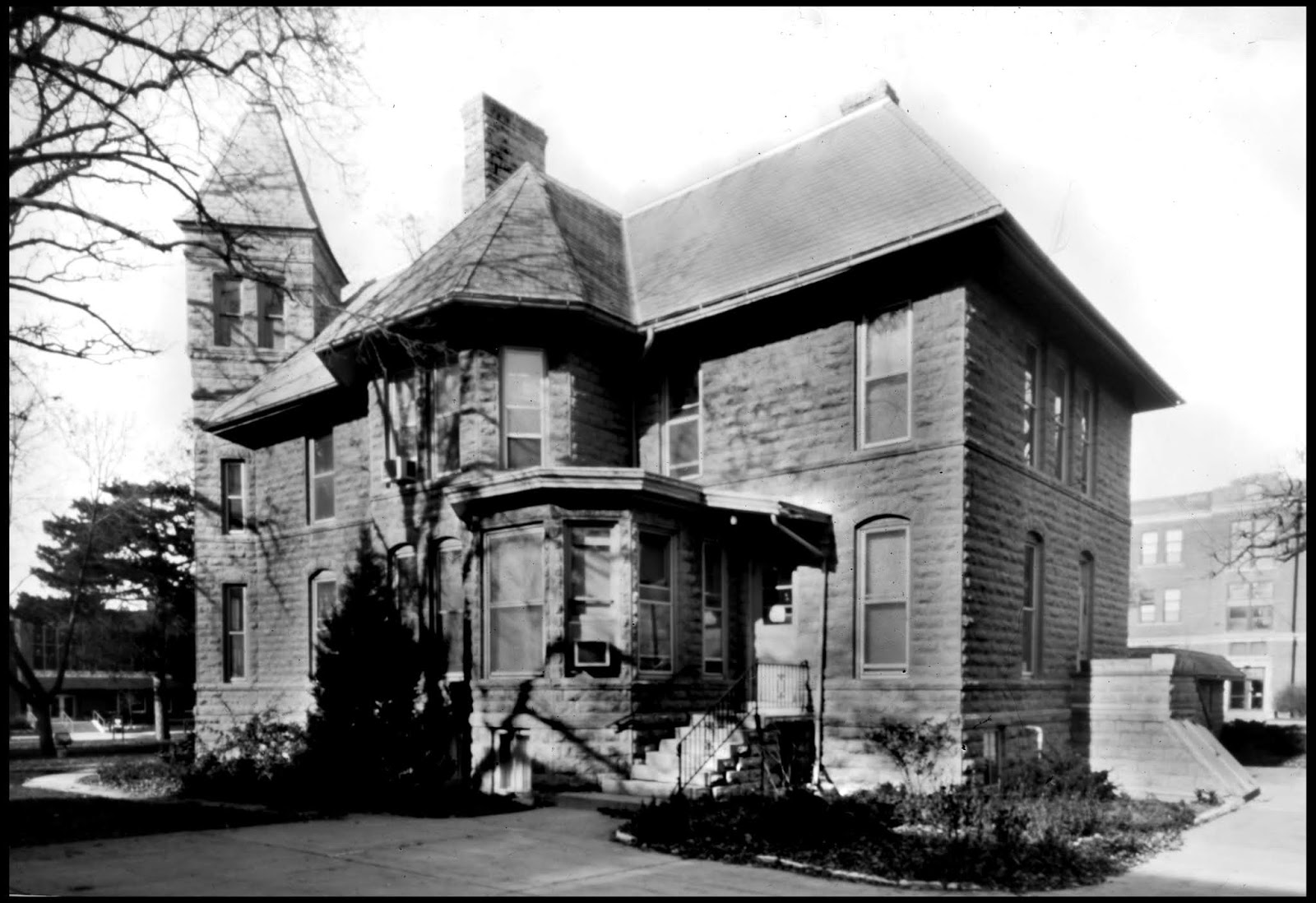
Oviatt House at five inches.


And ironically, really overexposed at 12 inches and f610, The Fredric March Theatre.


I was sitting on the steps of Swart Hall loading the paper for this shot with my arms past my elbows inside the extremely full changing bag. The tripod with a piece of old board on it was a few feet away. A couple looking like junior faculty parked where I was planning to point the camera, came by carrying a large desktop computer, said "hi" and went by me into the building. Just another day on campus.

It was hard to get the paper straight in the camera and these big floppy sheets of paper really get beat up taping and removing them from the camera in these confined quarters. I'm going to make some kind of cardboard frame to hold the paper in place and gently remove it.

But for now it's probably going to have to wait until it's warm enough to sit outside in a jacket light enough to get my arms in the changing bag.

Saturday, November 24, 2018

Variable Cuboid Mid-Mission Review


I’ve completed a second copy of the Variable Cuboid Pinhole Camera System and subjected it to testing. The system meets many of its objectives but some disclaimers are necessary where it misses expectations.

One defining feature of a camera system is that parts interchange between individual copies and I’m afraid, the hand-made Variable Cuboid can’t manage the tolerances to reliably achieve this interchangeability. The new camera back is about a millimeter larger than the original. The older fronts just won’t make it over the new back. With all my cameras, in order to make the joint between the front and back invulnerable to light sneaking through, I’ve always made the outer box by clamping it around the inner one when they are glued together. If the custom fit is tight enough to prevent light leaks in the camera it was originally made for, it just won’t go together if the new outside box is even slightly smaller than the original. Even with a flexible material like cardboard.

So you can make fronts of many different lengths for a specific back but your likelihood of making two backs the same size is basically random chance.

I made the second copy without comparing it to the first. I’m going to try to make another back measuring it against the last one, adjusting it at every step and see if it's possible to get them to fit interchangeably.

I make cameras to use myself but a goal has always been that the design was easy enough for anyone with minimal skills to make. I just made a 35mm Populist and it’s really easy. I may have crossed a line with the Variable Cuboid. It uses most of the same methods but to put it bluntly it’s harder to make. It has more parts, more layers, more specific clamping methods, numerous round holes to cut and numerous times where it’s necessary to wait until the glue is completely cured to continue.  I didn’t have any trouble with any of it but it might not be the best project to start with.

On the positive side, it meets the objective of being able to change the distance to the pinhole at any time without having to wait until the end of a roll of film. It does require a darkroom or changing bag to make the change. Making this change of length in the daylight would be difficult to accomplish with my cardboard, glue and scissors repertoire.

From my point of view, needing to go into the dark to change the length of the camera isn’t a big deal. I have a darkroom and changing bag. In actual practice I rarely shoot a complete roll in one outing and I kind of like the game of having a certain angle of view and hunting for scenes to take advantage of that length but it's also nice not having to finish the roll to play with something else. I did enjoy being able to use the wide angle for interiors and the long front for a walk around the neighborhood.

It was a pleasure to use. The finders were easy to see and line up. The film advanced smoothly. I glued wine corks around the wooden dowels to make an easier-to-grip winder. Like everything else with this camera, loading it requires a specific procedure, but once you learn it, it isn’t that hard.

I made two fronts for it, a 35mm with .25mm pinholes at f140 (optimal according to Mr. Pinhole) and a 100mm with .35mm pinholes at f286 (about 83% of optimum)

But the best part of building cameras is the user experience testing.

As soon as it was finished, with the 35mm mounted, I pointed it at an old standby, the south window in our kitchen using the on-axis pinhole.


The next morning, another trusty subject, the pothos above the bathtub, with the rising pinhole.


Later that afternoon, I changed to the 100mm and went out for a walk with the winter sun low in the western sky.


The bare giant oaks at the end of the soccer field casting their shadow onto the equipment sheds. After visiting Edward Gorey’s home on Cape Cod, I’ve been reading his anthologies. I think it’s starting to get to me. Rising front pinhole.


The white soccer goals spotlit by a sunbeam between the houses. On-axis pinhole


A tree, it’s shadow and another tree’s shadow against the Merrill Elementary Gym with the bicycle rack giving us a great big grin. Rising front pinhole 


There are two kindergarten rooms at Merrill School. On my inaugural ride with Goldberry, I depicted Andy’s sun-drenched kindergarten with storybook floor-to-ceiling, leaded-glass bay windows. This is the other kindergarten room. I think it might be from a different story. Rising front pinhole.


There was a waxing gibbous moon rising. I took this picture just to try to get it on film. It’s the fuzzy highlight just off the edges of the tree branches. Amazing to think the earth rotated enough to give it a little bit of a smear in the three minutes the shutter was open. Rising front pinhole.


I went around the building to try again and caught the last sunbeam illuminating the top of the middle school. It was pretty dim by now and the moon and the sky got overexposed while the negative gathered photons from the shadows. On-axis pinhole. (The camera is next to the elementary gym which is a little uphill from the middle school)


When I got back home, I put the 35mm front back on and made shepherd’s pie. I’m in front of the camera during almost the entirety of the half hour exposure.You can see lots of my utensils and ingredients, but I’m just a shadow on the cabinets. On-axis pinhole


The pie in the toaster oven. It only baked during a third of the 90 minute exposure. I was hoping there would be sort of a glow from the inside of the oven, but dinner would probably burn if it had been on during the whole exposure. On-axis pinhole


The next day, I had to go downtown early in the morning. I left the shorter front on the camera. This is the intersection of Church and Main. Rising front pinhole 


All summer I’ve been meaning to photograph the back of the Frontenac Flats, another work by ubiquitous Oshkosh architect William Waters. (The back of the building on the right in the previous photo is his also.) The front of the building on the corner of Brown and High Streets is a prime example of his neo-Romanesque style but this back view shows his attention to providing daylighting for the residents. Rising front pinhole.


All with Arista.edu 100 developed in Rodinal 1:50

It was a little discouraging when I discovered the parts wouldn't interchange between the new and the old Cuboids but I've recovered a bit after shooting a roll of film with it. It was also encouraging to see on Twitter that fellow midwesterner David Johnson had made one of my cameras. I don't hear that very often. I've already taken most of the pictures so I'll probably do a building-of post.

But you've been warned.

Monday, November 12, 2018

The evidence

In order to experience using a tripod, you have to shoot some film. Here's some of the data for my tripodology study.

Occasionally my bike rides take me on the Wiowash trail next to Highway 41 on the causeway over the Fox River and Lake Butte des Morte. In the center where it opens into a bridge, there are trails that lead down to the water's edge. I'd been down the one on the north side but until now had never gone down the one on the south. I discovered that it goes under the highway and over to the other side.

There was a boat full of fishermen just off shore sitting relatively still. I started with the PinRui flexible tripod wrapped around my bicycle handlebars.


Turning around, the view of the bridge itself.


Between 1980 and 2011, for state projects that are primarily for access by the public, there was a Wisconsin law which mandated that a small percentage of the construction budget be used to commission art work. Apparently they felt people accessing the bridge would be going by boat. Although the bridge has some decorative railings on top, I never knew these graphics were down here.


Walgreen's has decorative plantings around their parking lot. I had walked over so no handlbars to wrap the tripod around and nothing else handy. I had to put it down on the ground to capture this burning bush.


Another autumn show-off, again from about seven inches off the ground.


I switched to the ProMaster when I went out to rake leaves. Here I'm holding it against the trunk of our large pine.


Still held up against the pine tree but looking the other way up Central St. I thought I felt the camera slip around so I tried three exposures to hold it still. They all look about the same. This is the last one that I thought wasn't moving. The slight movement does give it a little extra pinholiness.


A view with the tripod on the ground, so no camera movement here.


An unsuccessful attempt at Footography.


I went on a bike ride with the Amazon. Can't wrap this one around my handlbars. Here it's held up against an oak tree.


Held up against a fence at the Yacht Club.


This happened to be on Halloween. It may look like the tripod is on the floor but it's held up against a column on the porch to get it just a little higher in order to look this guy right in the eye. The fluting provides some nice bracing to keep the hard plastic feet from sliding around.


This summer the arbor was covered with morning glory vines, although few morning glory blossoms. The first frost gave it a bit more of a Halloween appearance. The tripod is sitting on the gazing ball.


It is possible to hold the camera motionless held against a smooth wall but it takes some concentration.


I suppose if it were listed in a cooking supply catalog it would be called a counter top tripod.


It doesn't make any difference what the tripod is if you bump the subject during the exposure.


All with the Populist. .15mm pinhole 24mm from 24x36mm frame on Kodak Gold 200.

Monday, November 5, 2018

Omnia Pinholica est sustinetur in tres pedes

January 2024. When my university retiree account disappeared in 2019 with a new change in policy, the pictures I uploaded to this blog while logged into that account disappeared. I'm replacing those original pictures pictures with some current documentation of the fate of the discussed items, with new comments in the picture captions.

An infamous subject of the crown has assailed the assertion in my manifesto espousing the empowerment endowed by a tripod in the full and free expression of stenopaeic photography. I reaffirm my insistence on the inalienable right to point my pinhole at and from where I find it to be self-evident and to provide secure freehold for all film.

When in the course of a holiday's events, the resources to maintain stable practice became insufficient, it became necessary for this pinholist to go a little mad and to thrice seek to right this deficiency in the marketplace.

[picture of three tripods]

I got the ProMaster TRM-1 Mini Tripod on the left at Camera Casino. From the internet, I got the Amazon Basics Lightweight Mini Tripod in the center and on the right, with a name longer than the tripod, the PinRui Flexible Octopus Style Mini Tripod Stand Kit Universal for Cellphone Smartphone and Sport Action Camera. (Hmmm. PinRui. I wonder?) It also came with a phone adapter, a bluetooth shutter remote and another clamp that I can't quite figure out.

Of course I was doing this to get over my grief at the loss of my little ProMaster folding tripod. It was a workmanlike little support and its defining feature was that it folded into a flat little slab about the size of a TicTac dispenser. It would fit in almost any pocket. You could sit on it without discomfort. I hadn't realized it until it was gone, but it's rubber feet were a critical attribute.


My broken tripod


No one seems to make tripods that fold flat like that any more. When I dropped my film off at Camera Casino, I thought I'd found a replacement, the T2 Mini, again by ProMaster, although it's a little longer than my old one. (I took this picture to use up the film in The Populist before I dropped it off.)

When I got home I discovered that although it was nice and flat, it's head only tilted back and forth, no swivel, no tilt to the side.  Not going to work for me. I also got one of their little gag keychain tripods that might hold one of my 35mm cameras, but the head doesn't lock and it falls right over. 

I went through the pile of the keychain tripods and found one with a head that's stiff enough to hold a 35mm Populist. I carry it as a back up and it occasionally gets used. It's really easy to fit in your pocket.


When I went back to pick up my developed film, I exchanged the T2 for the TRM-1. They only had two colors in stock - red or blue.  Red would attract more attention so I got the blue.  

A leg came off pretty quick and I got a new one, but it's never been my favorite.


In between the visits to Camera Casino, I had already bought the other two on Amazon.

So what peculiarities maketh the vision of the pinholist stir and ease the trembling of the illuminated plane? 

General Pocketability

It seems like an odd place to start, but I carry one of these with me almost all the time, all year round.  It's an easier business when it's cold enough to wear a jacket but pockets in Levi's are not made to be particularly voluminous, probably for visual reasons, which I admit to noticing in the mirror.
  
It's about a tie between the ProMaster, a little shorter, and the Amazon, a little smaller circumference.  The PinRui just barely fits in a back pocket and it makes a more noticeable budge, although with it's mostly foam covering and conformable shape, it's not that uncomfortable to sit on.

Weight is a factor in this pocket game. This time the Amazon and the PinRui tie at 54 and 55 grams. The ProMaster is a distant third at 98 grams. That's still not a lot of weight though. They're all almost unnoticable in my pocket. The heft of the ProMaster could be an advantage on a breezy day.

Durability and strength

I'm going to be pressing these things against hard surfaces and frequently sitting on them. It seems a little premature to evaluate durability, but I think we can make some assumptions. The ProMaster wins hands down. Except for the handle on the socket clamp and the feet, it's All Metal. A lot of the Amazon is plastic. It's legs are held on a metal plate with screws so someone thought about it. I'm a little skeptical of the PinRui. It's covered with foam. I've seen foam tear and deteriorate into crumbly bits leaving an ugly and sticky residue. I don't know anything about metal fatigue but how many times are those legs going to flex before they break? Let's say its going to get it a good test. One of its legs came out of where it attached to the top but it pressed right back in and seems to be staying there. That flexible wire probably won't maintain a thread to screw it in with.

I've had generally good luck with the folding-flat tripods. I've only had two break in the last ten years. My old little ProMaster was 7 years old. 

They're cheaper than most sandwiches so cost comes before utility and life span in their design. They're between 5 and 10 dollars on-line. Not a significant investment to replace but it's irritating to have something come apart in the field very often.

Maximum height.

I like to get the camera at least a little off the ground or a table's surface. The ProMaster has three section legs, the Amazon two, and the PinRui's legs are just one piece.  

The ProMaster wins, even though it looks like I pushed two of it's legs in a bit futzing with it. I can handle that as long as I get the camera level. The PinRui comes in second, but at the expense of narrowing its base, ergo stablility. The Amazon has a greater angle of extension and is really spread out when extended like this. Stable, but covering a lot of real estate.

Minimum height

Yes, Justin, I know I can put the camera right on the ground. I usually want to get this low to point at something on the ground and occasionally to point up and into a plant. The ability to keep from falling over when the camera is tilted 45° down without getting its legs in the picture is also a consideration, which they all passed.

The PinRui squashes down to the surface the closest. It also gets points for being continuously variable on those bendy legs. It's pretty spread out and stable. If your surface isn't that big you can bend the legs down to clamp over the edges. Notice the angle of the ProMaster's legs. That knurled band just above the legs screws up and down, changing the maximum angle so there's some fine tuning on that one too.

The head

The ball and socket must be adjustable on two axes and hold the camera in place for the picture. 

The ProMaster and the Amazon have the same general design, a cylindrical enclosure with the clamping bolt at the bottom. The ProMaster's head also rotates when it's loosened. On the Amazon there's a phillips head screw between the legs that holds them to the head. If that screw is loose the head will swivel around but is useless that way unless in a vertical position. In addition, you have to make sure that when that screw is tightened, the gap in the head, which allows you to tilt all the way over 90°, is aligned between two of the legs. Otherwise they'll get in your way when the camera is pointed down or you're holding it against a wall. These heads also seem to be either loose or locked with no variable drag. The PinRui has a plastic cup containing the ball with a clamp in the back that squeezes it tight. Even with the clamping bolt completely loosened, it has enough drag to hold my two ounce cameras in position. It's tempting to just leave it loose but once the nut came off the bolt in my pocket, so best to tighten between photographs.


Holdability against a vertical surface.

Just as often as I set the tripod down on a horizontal surface, I hold it against a wall or light post.  It's necessary to still be able to get the camera level and pointed at whatever angle I want.


It seems they all past the test but it was much easier to hold the PinRui against the wall than it is the other two.  It comes down to two things. The lesser is that the legs of the ProMaster and the Amazon both flop back together when held up like this and you have to adjust your grip to hold them at maximum spread.  The PinRui, while you can't press too hard or it will bend, has legs that stay where they're put until acted upon by an outside force.

The more important thing that makes the PinRui better at this is something that hadn't occurred to me before - the feet. Even though I had dealt with slippery feet on an antique wooden tripod in the past.

My old little ProMaster had feet of hard rubber. This ProMaster and the Amazon have feet of hard plastic. They're almost impossible keep from sliding across a smooth surface, especially when you're putting a little force on it to hold it in place in a clumsy posture. I tried to modify the ProMaster by wrapping the feet with a couple layers of black duct tape, which helps a little but it still takes concentration to get it to hold still. The PinRui's feet are medium hard rubber with a high coefficient of friction that doesn't slip and combined with the light weight is easy to hold in place even for a long exposure.

Span

This one is rarely used but sometimes, the most stable place is spanning a gap, between two branches or over a bumpy surface.

The ProMaster can bridge a slightly broader expanse but something tells me the feet of the PinRui are going to make it sit more stably in that kind of a situation.

In summary, each of these has unique advantages and I'll probably use them all at some time.

The Amazon

The lightweight Amazon's major advantage are it's good looks. You could pull it out of your Chanel handbag at the gala ball and it would fit right in. It's small and light and probably the least likely to create an unsightly bulge in your suit jacket pocket. It's good enough and if I could fix the issue with the slippery feet, it would be adequate in most situations.

The Amazon turned out to be the only one of these that survived. It was my go-to desktop tripod for several years.

The ProMaster 

It's noticeably stronger and better engineered and with the rotating head and the variable angle legs, a lot more adjustable than a lot of desktop tripods.  

I wouldn't recommend it but it's just strong enough to hold this N50 with a body cap if you don't try to tilt it too much. It falls over with a lens on it.


The PinRui

The flexible legs make it completely different from any other tripod I've had, and I have to admit I'm having fun fooling around with it.

The legs of this one couldn't stand up to the use and came off several times until I couldn't get them inserted any more. I repurposed the head attaching to a clamp with rubber bands.


I've always been tempted by Jobo's Gorillapod for the capability to attach to things but it's too big and heavy for everyday transport in a pocket. This one does pretty much everything a regular desktop tripod does, plus everything you could possibly imagine. Those legs wrap around things and clamp to some really odd shapes.


That ability to come out of my pocket and quickly wrap around the handle bars is something I will use a lot.  Strapping and unstrapping a full tripod to a bicycle is annoying and the rails, benches, trees, signs and tables I depend on aren't always nearby. This gives me some good height off the ground and it only takes a second to deploy it this way.

The foam covered, segmented, bendy legs are kind of odd looking and impossible to get perfectly straight ever again. My anal-retentive inner graphic artist wants to try to straighten them but I'll get over that.


I eventually got the smallest version of the Gorilla Pod. The joints are a little iffy and it comes apart if you try to wrap it around things, but the part can be popped back on.  The magnetic feet are really great if you're on an iron or steel object. Not really something I can depend on.

Our lovely models for this pageant have been the PrePopulist on the ProMaster, The Populist on the Amazon and lately made just for these photographs, a new Understudy for The Populist which is now loaded, in my pocket with the PinRui, continuing our investigations in tripodology.

And yet I can exercise my free choice to place the camera directly on terra firma.

My current favorite, and likely to be for a while is this little Dorr which nearly duplicates the features of the ProMaster whose loss started this whole thing, but made out of a little better material and solid screws.


Tuesday, October 30, 2018

Roadtrip: Thoughts on traveling with a pinhole camera.

The film I used on this trip was Portra 400 in the Evil Cube and Long John Pinhole, Lomography 100 in the Variable Cuboid and Kodak Gold 200 in The Populist. They are quite different and I got sick of messing with color balance to get them to look the same and gave up.

Rock and Rochester • Blue hills, blue water, and black humor • Art is what you can get away with in Western Pennsylvania • The other side of Lake Michigan It sure is hard not to overexpose Portra 400 on a sunny beach, even at f362. It’s hard to make long exposure decisions about film use during a quickly changing sunset. Some of the exposures were measured with Pinhole Assist, some guessed and some for as long as I could get away with leaving the camera with the shutter open. I'm continually amazed that I always get a usable negative, although that sometime takes a little work. When I said that the Classic View at Fallingwater was the only view, I mean by a few inches either way or something was obscured. Guess who people had to wait for during a 1 minute exposure? Eastman House was a great review of the history of photography, despite the limited gallery space. The current history exhibit was a survey with just the work of women photographers. Unlike some fields that included one of the greats in every era. It was cool to see a disassembled No. 1 Kodak that's set up much like the Variable Cuboid including just having sighting lines for viewfinding. It gave me an idea for a new shutter.
A full size tripod is a heavy thing to walk around with, dangerous in close quarters and possibly in someone else’s way but maybe a deterrent to muggers. I wish I could have tried to get pictures in five lanes of traffic at a dead stop. I have done it before. I momentarily thought about it but this time my attention was already fully engaged. Driving in stop-and-go traffic really takes concentration. This has nothing to do with pinhole, but it sure is nice to have 305 horsepower and brand new tires at your disposal when you need it. On the hotel parking forms, I never listed it’s make as Ford. It was always Mustang.
Museum benches are usually located in the middle of the gallery facing a significant art work, but the pinhole view in the other direction often yields a more interesting photograph. I try to avoid putting the camera on the floor because it's too noticeable. Also people tend to look where they're sitting in a public place, but they don't always look where they're walking, expecially in an art gallery. Once you do find a place to put the camera, getting multi-minute exposures is not all that hard when you’re looking around a gallery of paintings. It was weird to lose the New Glarus Populist. In a busy place like the Philly Art Museum steps, it was probably noticed soon because of the shiny bronze-colored tripod, especially since people often watch their feet when walking down a monumental stairway like that. I wonder what they made of it. Last year in Strasbourg I almost lost The Populist and tripod when they fell out of my jacket in a taxi. The driver found it and came running after us. It pays to tip. People do recognize them as cameras because they’re mounted on a tripod but I’m still stunned about how unextraordinary my pinhole cameras are. One assumes people at George Eastman house are interested in photography. We weren’t the only people photographing the Lake Michigan sunset. At Fallingwater they had to wait for me to take a picture with their SLR’s (only a minute). No one said anything. The concierge/desk clerk in Michigan who watched over the Populist never said “Wow, Pinhole! How’s that work?” He just cheerfully agreed. At the toll road service plaza, I looked among the phone accessories for a new tabletop tripod but no luck. Except at the Kodak Kathedral, I never looked to see if anyone had film. The Andy Warhol Museum had Polaroid film and cameras. I saw pinhole camera kits in several gift shops, usually in the children's section. The pinhole photography sure was fun. It makes you look really closely at things and the environment around them. The long exposures and limited frames of film make you really carefully consider whether and from where you want to take that picture.
We’re thinking of airplanes and trains again for our next adventure.

Sunday, October 28, 2018

Roadtrip: The other side of Lake Michigan

Since most of our stops were in large cities, we thought a little lakeside resort experience would ease us back into normalcy.

 Previous episodes:    Rock and Rochester      Blue hills, blue water, and black humor       Art is what you can get away with in Western Pennsylvania

Until I was 11 years old, I lived in South Bend, Indiana. About twice a year, we would go up to Warren Dunes on the shore of Lake Michigan to frolic in the waves and the towering dunes. Sparked by that memory, Sarah began collecting a series of Art Deco posters that are in regular rotation in our kitchen promoting Warren Dunes as a getaway from Chicago on the South Shore Line railroad. We decided to make it our last featured destination.

I tried to find accomodation along the lakeshore, and specifically not a chain motel in a cluster alongside the interstate. It was a Saturday night and everything in our range seemed booked with weddings but one of them had a second smaller hotel linked to from their web site. It seemed just the thing, and they had rooms available.

The Gordon Beach Inn, "a casually active, rustic and historic 1920's Inn."  I'd also throw quaint in that description. Both of the men who staffed the desk could easily have been cast in Bob Newhart's innkeeper role, but were much more cheerful. There are separate metal keys for the rooms and the outside doors which they secure at 11:30 pm on weekends. They sent us a letter in the mail confirming the reservation. It was very nice.

Variable Cuboid with 45mm front  - rising pinhole

I had to get a picture of the back porch in the evening sun. My Aunt Stana's cottage on Christy Lake looked exactly like this.

Variable Cuboid with 45mm front - rising pinhole

The Inn is about two blocks from the lake but they have their own private beach accessed by a narrow path between two private homes and a stairway down the bluff. Until the sky cleared while we were on the Ohio Turnpike, it hadn't occurred to us that we would be there for the sunset over Lake Michigan.

I hate to get all Claude Monet about this, but it was notable how the light changed minute by minute as the sun went down. I began with Long John Pinhole to concentrate on where the sun hit the horizon.  It was cloudy in that direction, but The Photographers Ephemeris gave me the accuracy to point with the narrow angle camera in case the sun peeked out. Low tech photography, ya know.


The sun never actually appeared through the clouds, but the sky kept changing. f362 isn't really where you want to be when the light is fading, so I switched to the Variable Cuboid.


A more shoreward view


I think the shoreline, the reflection of the sky in the moving water and how the pinhole records that last wave are more interesting than the sky.


I switched to the Populist to see if I could keep following the more intense visually, but technically dimmer show.


The display just kept getting more intense. We had dinner reservations for our last night on the road so about twenty minutes after the sun had actually set, we headed back toward the hotel. It must have been sunny in Wisconsin because when we got to the top of the stairs, the underside of the clouds was illuminated creating a flaming red psychedelic sailor's delight.

I can't believe how bold I'm getting. After enjoying breakfast in the adjacent dining room, I decided to try to get a picture of the lobby. I put the Populist on the big tripod behind one of the leather couches and explained to the gentleman at the desk what it was. He said he'd watch out that no one bumped it. I went back to the room, finished packing, hauled our stuff out to the car and after exchanging pleasantries about our plans, closed the shutter just as we left. This should help you understand my reference to the Overlook Hotel in a previous post .


Warren Dunes is just a few miles from the Inn. It was still fairly early with the sun low behind the dunes.


We climbed one of the lower dunes. A favorite activity as a child was to climb the steepest face of Tower Hill, the highest one, and run down with our arms windmilling to keep our balance until we fell and rolled down in the sand. A group of 10 year olds demonstrated this while we were there.


Down near the lake this one giant clings to the sand.  The wide angle makes it look a little more isolated than it really is.


It's been there a while from the look of it's gnarly roots. Think I played on it as a child?


It was a brisk October day and there were more people around than I expected. Still, the nearly empty beach and overexposed Portra 400 give it the look of an Antonioni film.


A sailboat passed by just off shore.


I have to conclude with a tribute to our noble steed - union made in Michigan.  It brought us through nightmare congestion on the Boston Beltway in rush hour (starting in Albany!), New York City crossing the George Washington Bridge and downtown Chicago over the Calumet Skyway. We went into the middle of Cleveland, Rochester, Philadelphia and Pittsburgh. We went over the Appalachians in continuous drenching rain. It did everything it was asked including escaping from a few tailgaters in almost 90mph traffic. Also seered in memory is the high fidelity voice of Siri over the car audio system, with her omniscient and insistent description of where to go.


There's always the sweet conflict of having a few frames left in the camera. We returned on Sunday night and Camera Casino's weekly trip to the lab happens at 10:00 am on Monday.

On the way downtown, I took a photo of the Oshkosh Publish Museum to make up for leaving and dallying with other museums.


And then to Miller's Bay and Lake Winnebago to make up for flirting with two great lakes and Cape Cod Bay.


Next, random thoughts on traveling with a pinhole camera.